
Dental Crowns – Sterling Heights, MI
A Lifelike Cover to Protect and Restore Your Damaged Tooth
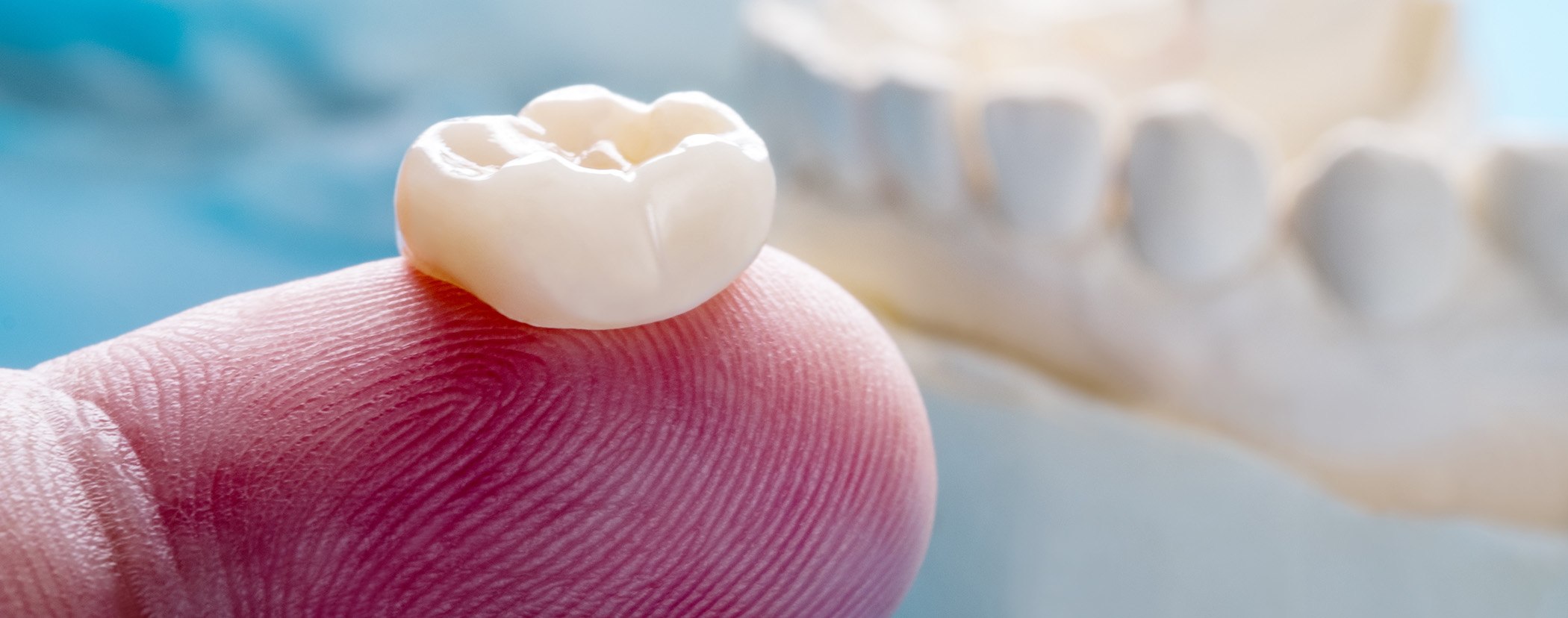
If you have a broken, misshapen, or severely decayed tooth, it’s important to address it as soon as possible to prevent it from sustaining additional damage or disease. Dr. Tamara and the rest of our team in Sterling Heights can provide a lifelike cover to protect and restore your damaged tooth with a dental crown.
Continue reading to learn more about this treatment so you know what to expect from these resilient, tooth-shaped caps, and feel free to contact us for additional information.
Why Choose Dynamic Dental of Sterling Heights for Dental Crowns?
- Spa-Like Amenities to Enhance Patient Comfort
- Insurance Accepted & Flexible Financing Available
- Customizable, Tooth-Colored Materials
What is a Dental Crown?

A dental crown is a resilient cover made to resemble your natural enamel that’s cemented over an injured tooth to improve its appearance and allow you to continue using it normally. In the past, they were made from amalgam mixtures of metals, but Dr. Tamara provides beautiful restorations made from durable ceramic that can be customized to be the right color, size, and shape for seamless results.
These covers are a versatile treatment that can be used in several ways, such as to:
- Safeguard a broken or decayed tooth.
- Shield a tooth that underwent a root canal.
- Cap a dental implant to replace a single missing tooth.
- Anchor a dental bridge to rebuild one or several lost teeth in a row.
- Cover teeth that are misshapen or stubbornly stained to improve your appearance.
The Dental Crown Process
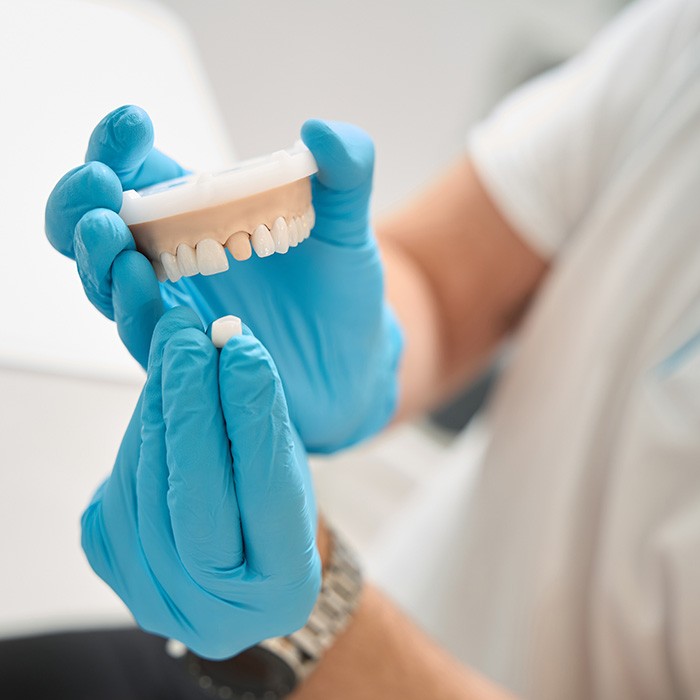
Typically, the process of being fitted with one of these tooth-shaped caps requires two appointments scheduled a couple of weeks apart. During your initial visit, our team will examine your mouth to determine whether this is the best solution to meet your unique needs.
If so, we’ll need to prepare your tooth by numbing it first, then removing a small amount of enamel so your crown can fit correctly. Next, we’ll make impressions of your teeth and gums that will be sent to a special dental laboratory that uses them to create your one-of-a-kind restoration.
It can take a couple of weeks for your permanent crown to arrive, so Dr. Tamara will likely place a temporary version to shield your tooth in the meantime. Once the finished prosthetic arrives at our office, we’ll contact you for a final fitting to check that it functions correctly before cementing it in place.
The Benefits of Getting a Dental Crown

There are several advantages of receiving a dental crown in Sterling Heights, including:
- Preserving your oral health. The sooner the cap is placed, the less likely you are to develop additional problems in your troublesome tooth.
- Enhanced comfort. These covers protect damaged teeth so you can use them for daily biting and chewing without experiencing aches.
- Versatile solution. These can address one or more concerns simultaneously, such as improving your smile’s appearance as well as its functionality.
- Easy maintenance. Keeping your restoration clean is a simple matter of brushing and flossing twice daily, avoiding hard and sticky foods, and visiting our office every six months for a routine checkup and cleaning.
- Long-lasting repair. Your prosthetic can potentially remain in good shape for 5 to 15+ years if cared for correctly.
Understanding the Cost of Dental Crowns
One of the first questions on many patients' minds when they learn they need a dental crown is how much it costs. However, the pricing can depend significantly on your individual circumstances.
Our team in Sterling Heights is happy to provide a detailed estimate after you consult Dr. Tamara and we know more about what’s needed to restore your damaged tooth. Continue reading to learn more about how the rate is determined and how we can help make your treatment more affordable!
Factors That Affect the Cost of Dental Crowns
Once Dr. Tamara has examined your mouth and confirms that you’re a good candidate for a dental crown, we can provide an anticipated cost based on your unique situation. Several different factors can potentially impact the total amount, such as:
- The severity of your condition. You’ll be required to pay for any additional services, such as a root canal procedure, that might be necessary to treat your smile.
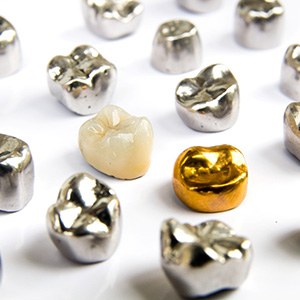
- The type of material used. These tooth-shaped caps are sometimes made from amalgam metals, gold, or ceramic, which can affect the final invoice. Our team utilizes durable ceramic that can be customized for seamless results.
- How your restoration is made. Traditional crowns are created in a special dental laboratory, though some providers offer same-day CEREC restorations, which may cost more due to the technology and materials involved.
You might feel tempted to select the cheapest available option, but keep in mind that when it comes to dental repairs, the quality of a product is often reflected in its price. Many patients feel it’s worth the investment to receive a lifelike, resilient restoration intended to last.
Does Dental Insurance Cover Dental Crowns?

It’s natural to wonder whether your dental insurance policy includes this repair, and thankfully, most plans do cover at least a portion of the cost. For instance, many pay about 50% of the total, though there are no guarantees. Furthermore, some policies include restrictions, such as requiring that your procedure be deemed medically necessary for your oral health or limiting the number of teeth that can be treated.
It's worth verifying your details to understand what’s included in your plan. If you’d like help finding the information or submitting insurance claims, please don’t hesitate to contact us! Our office staff is familiar with the process and is happy to help you maximize your available benefits.
Options for Making Dental Crowns Affordable
Dental crowns are a versatile solution that can be used to shield injured teeth, improve their functionality, and prevent additional damage. However, if you’re uninsured or on a tight budget, you might worry that you can’t afford this service.
Fortunately, Dr. Tamara believes that everyone deserves to have access to potentially smile-saving care, so we’ve partnered with CareCredit to offer flexible financing. If your application is approved, you can divide your final invoice into more manageable installments to be paid over a designated period.
Dental Crowns FAQs
Are Dental Crowns Permanent?
Although technically not permanent, dental crowns are definitely a long-term solution for protecting your tooth for anywhere from five to fifteen years.
When your dentist in Sterling Heights reshapes your tooth for a dental crown, that procedure is considered irreversible, because tooth enamel cannot grow back after it has been lost. Thus, that tooth will always need a crown for protection moving forward.
Crowns protect the underlying tooth from additional damage, helping your tooth survive much longer than it likely would have otherwise.
You can keep your new crown in excellent condition for years to come by taking good care of it with regular daily oral hygiene, routine preventive dental check-ups and cleanings, and by wearing a mouth guard or nightguard if necessary.
How Long Do Dental Crowns Last?
On average, you can expect your new dental crown to last between five and fifteen years, but this can vary depending on the material it’s made from.
More so than the material, the longevity of your crown depends on a variety of individual factors including your diet, oral hygiene, and whether you have any bad oral habits like smoking, nail biting, or teeth grinding.
Crowns on front teeth may last slightly longer than those on molars, as they are not subject to the same amount of wear and tear as back teeth.
Do Dental Crowns Get Cavities?
Technically, it’s impossible for a dental crown to develop a cavity, but the tooth underneath it still can. In fact, a crowned tooth still has about the same risk of tooth decay as an uncrowned tooth.
Poor oral hygiene allows bacteria and plaque to form around the gumline where your tooth meets the crown. They can then travel underneath your crown, wreaking havoc on the underlying tooth.
You can help prevent cavities in your crowned tooth the same way you’d prevent them in any other tooth: with daily brushing, flossing, and regular check-ups and cleanings from your dentist.
Can Dental Crowns Be Whitened?
No matter what your crown is made of it cannot be whitened like your natural teeth can. That’s because tooth enamel is covered in tiny pores through which bleaching gels can enter and break apart stains. Dental restorations like crowns do not have these pores, and thus your crown should always remain the same color.
Metal-free crowns are designed to blend in seamlessly with your surrounding teeth. To minimize the risk of your natural teeth becoming discolored and making your crown stand out, ask your dentist about getting a professional whitening treatment prior to having your crown placed. This way, your crown will be matched to the ideal shade of your teeth.